

An SEO data analyst career offers attractive pay. The national average sits at $54,688 per year. But that’s just the starting point.
The field shows strong growth potential. Market research analyst roles may grow by 19% from 2021 to 2031. That’s much faster than average.
Why this surge? SEO analysts shape digital strategy in crucial ways. They impact online visibility, customer engagement, and revenue directly. Their work combines technical SEO with data analysis expertise.
This guide breaks down what an SEO data analyst does. You’ll learn the core skills needed. We’ll show you the career path, salary ranges, and job market trends for 2026.

What is an SEO Data Analyst?
Role Definition and Overview
An SEO data analyst bridges raw data and actionable insights. You analyze website performance using Google Analytics and Search Console. Your focus is on data interpretation and trend identification.
The role demands a data-driven mindset. You monitor analytics to spot patterns others might miss. This makes you a key player in shaping digital presence. Your recommendations influence online visibility and organic growth.
Think of yourself as a detective of search performance. You dig through metrics, performance data, and user behavior. The goal? Surface insights that drive better rankings and traffic.
How It Differs from SEO Specialist
Here’s where the roles diverge. An SEO data analyst monitors campaign effectiveness through analytics. An SEO specialist executes and develops those campaigns.
You assess while specialists implement. They build link strategies and optimize content hands-on. You analyze the results and determine what works. Specialists have extensive SEO knowledge for implementation. You bring analytical skills and data interpretation expertise.
Specialists are the builders. You’re the quality control measuring their success.
Day-to-Day Responsibilities
Your morning typically starts with data review. You check traffic patterns, keyword rankings, and site performance. Tools like SEMrush and Ahrefs become daily companions.
Next comes keyword research using dedicated software. You identify high-volume, low-competition opportunities. Competitor analysis follows, revealing what works in your industry.
Technical audits fill your afternoon. You scan for broken links, slow load times, and mobile issues. Collaboration with development teams helps fix these problems quickly.
Key Tasks and Deliverables
Your core deliverables include:
- Keyword research reports identifying new opportunities
- Technical audits diagnosing SEO issues
- Performance reports tracking organic traffic and conversions
- Content optimization recommendations for better visibility
- Weekly reporting with actionable insights
You track metrics like organic traffic and conversion rates. Time on page matters too. These inform your recommendations to content teams and executives.
Link-building strategy support falls under your umbrella. So does monitoring paid search campaigns when needed. You stay current with SEO trends and algorithm updates.
Your output shapes how teams approach SEO across the organization.
Core Skills and Tools SEO Data Analysts Need
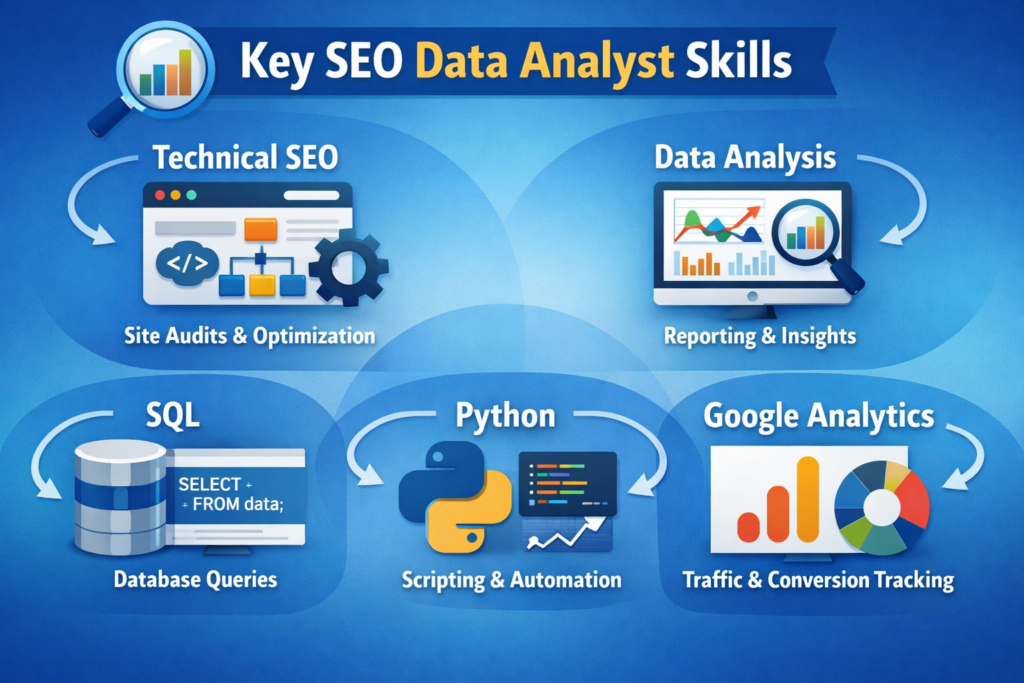
Technical SEO Skills
Technical mastery forms your foundation. You need to understand crawlability and indexing. Search engines must access your pages easily.
Site structure optimization keeps pages close to the homepage. This helps crawlers find content quickly. You’ll work with XML sitemaps to guide search engines.
Understanding canonical tags prevents duplicate content issues. HTTPS implementation secures user data. Page speed affects rankings on mobile and desktop.
Data Analysis and Statistical Knowledge
Data skills drive your SEO campaign reviews. You compare performance across time periods. This reveals which strategies resonate with audiences.
Statistical models help predict future performance. You’ll use regression analysis to forecast trends. Pattern recognition separates successful analysts from average ones.
SQL and Python Proficiency
SQL queries handle large datasets efficiently. You can analyze keyword data across millions of rows. Python libraries like Pandas manipulate data for deeper insights.
These languages clean messy data before analysis. Python builds forecasting models using historical performance. SQL merges data from multiple sources seamlessly.
Google Analytics and Search Console
Google Analytics tracks visitor behavior and conversions. You’ll monitor traffic sources and engagement metrics. Search Console shows how Google views your site.
The Performance report reveals impressions, clicks, and positions. Core Web Vitals identify speed issues. URL inspection checks indexing status instantly.
SEO Tools: SEMrush, Ahrefs, and Screaming Frog
SEMrush provides keyword research and competitor analysis. Its database contains over 27 billion keywords. Ahrefs leads in backlink analysis with 35 trillion live links.
Screaming Frog crawls websites for technical issues. It finds broken links and duplicate content. The tool costs around $259 per year.
Data Visualization Platforms
Looker Studio transforms complex datasets into understandable visuals. You build custom dashboards combining multiple data sources. Charts and graphs communicate insights to stakeholders effectively.
How to Become an SEO Data Analyst in 2026
Educational Background and Requirements
No single path leads into this field. A bachelor’s degree helps but isn’t mandatory. Marketing, communications, IT, and business majors build relevant foundations.
Many positions prioritize experience over formal education. Self-taught professionals complete certification programs instead of degrees. Your skills matter more than credentials.
Essential Certifications That Matter
HubSpot’s SEO Certification Course runs 3 hours 35 minutes. It’s free. You’ll learn keyword research, link building, and reporting. Google Analytics Certification strengthens your profile.
Moz SEO Certification and SEMrush credentials boost expertise. Digital Marketing Institute offers an SEO course for $445. These certifications demonstrate commitment to employers.
Building Your Portfolio
Start with LinkedIn for free project hosting. GitHub works well for code samples and Jupyter Notebooks. Kaggle displays competition results and datasets.
Include projects showing data cleaning processes. Add visualizations that tell stories. Demonstrate SQL and Python abilities through documented work. Your portfolio validates skills beyond resume claims.
Step-by-Step Career Path
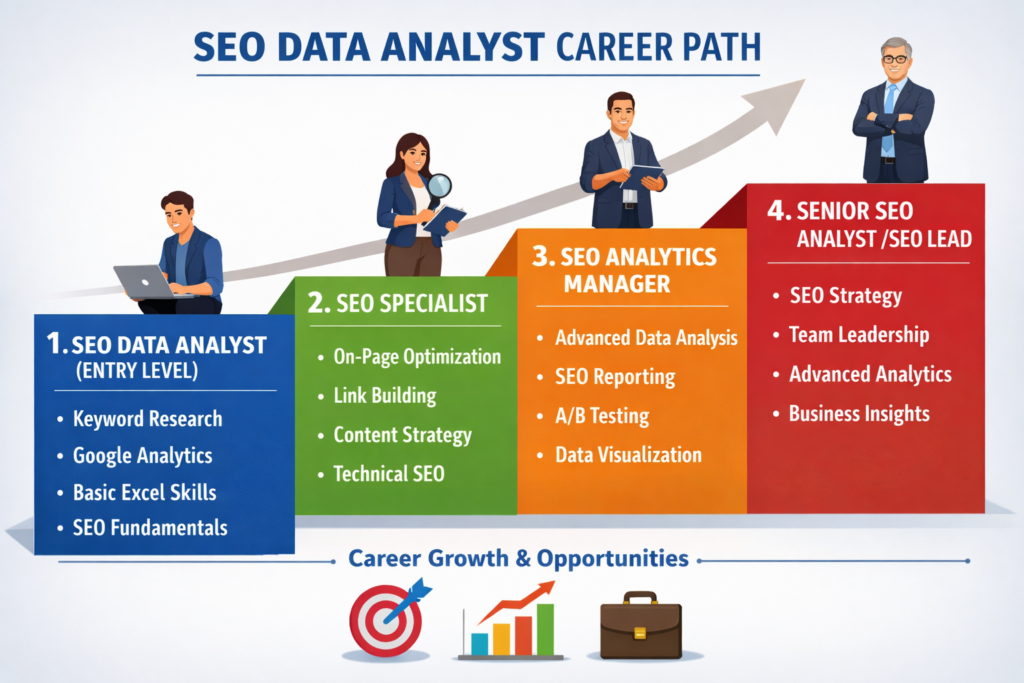
Begin as an SEO Specialist or Junior SEO Analyst. These roles offer insights into optimization strategies. Gain practical experience analyzing site performance.
Pursue advanced certifications while working. Build your network through industry associations. Specialize in specific sectors like healthcare or e-commerce. Transition into strategic roles as you grow.
Realistic Timeline from Entry to Senior Level
Entry-level positions last 1-3 years. You’ll collect and prepare data during this phase. Junior analysts work more independently, taking 3-5 years total.
Senior roles require 5+ years experience. You’ll handle complex modeling and mentor others. Management positions open after demonstrating leadership capabilities.
SEO Data Analyst Career Outlook
Salary Ranges by Experience Level
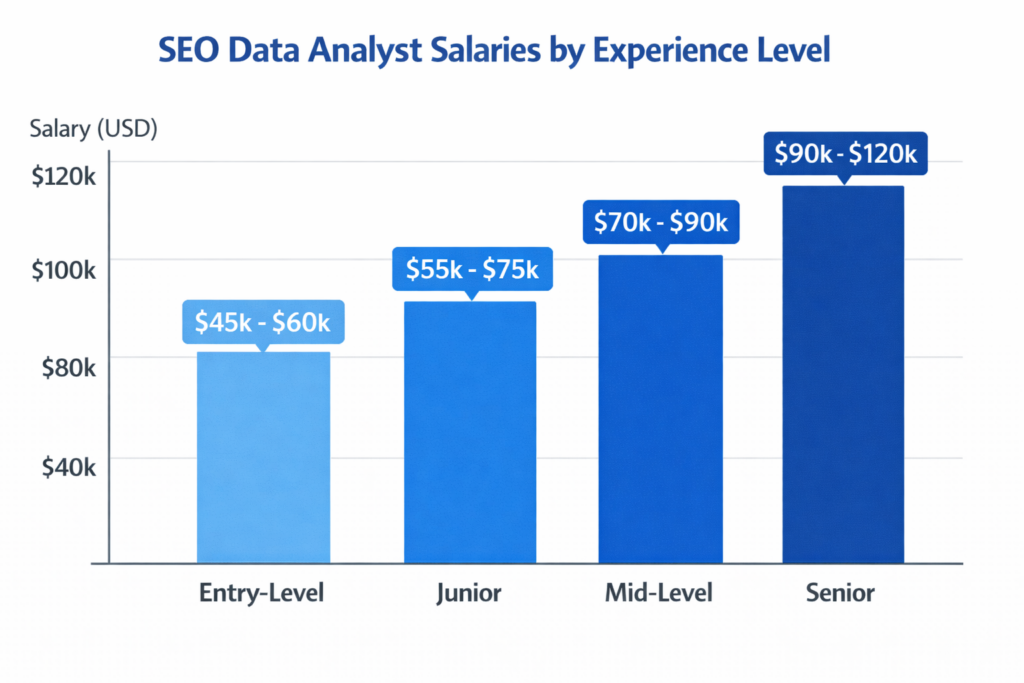
Your earning potential varies significantly by experience. Entry-level positions start at $60,751 annually. The national average sits at $90,000 per year.
Mid-level analysts with 2-4 years earn between $60,000 and $110,000. Senior analysts command $75,000 to $117,500. SEO managers typically earn $70,000 to $137,326 annually.
Directors of SEO reach the highest tier. Salaries range from $105,000 to $200,000. Top earners at major companies exceed these figures.
Geographic location affects compensation substantially. San Francisco offers a median of $128,000. New York City pays around $117,000. Smaller markets like Phoenix average $67,000.
Job Market Demand and Growth
Job growth for digital marketing professionals projects at 6% through 2032. This exceeds the national average slightly.
Market research analysts rank among the top 100 jobs nationwide. SEO specialists remain in particularly high demand.
However, current hiring sits roughly 25% below pre-pandemic levels. Economic uncertainty affects hiring behavior across the industry.
Professionals with AI, Python, and SQL skills command 20-30% higher pay than peers without these capabilities.
Key Responsibilities and Daily Tasks
You monitor core metrics reflecting user behavior shifts. Search trends and AI-driven visibility changes require constant attention.
Building executive performance reports becomes routine. You identify attribution patterns highlighting content and development impact.
Investigating how users interact with AI tools matters increasingly. You assess how content influences information returned by these platforms.
Collaboration with data engineers refines tracking mechanisms. Clean, reliable data depends on this partnership.
Career Growth and Advancement Opportunities
Career progression follows a clear path. You advance from junior roles in 2-4 years to management positions.
Leadership roles typically arrive after 6-10 years. The timeline depends on skill development and demonstrated results.
SEO evolves into Answer Engine Optimization and Generative Engine Optimization. This evolution makes the career path resilient and future-proof.
Specializing in technical SEO or enterprise-level work yields highest salaries. Working in-house at larger companies typically results in premium pay.
Remote Work and Freelance Trends
Remote SEO positions offer competitive salaries. Entry-level remote roles start at $55,000 annually. Mid-level positions range from $65,000 to $120,000.
Senior remote roles command $128,500 to $192,500. Director-level remote positions reach $145,000 to $155,000.
Freelance SEO data analysts earn $50+ per hour. Experienced specialists in high-demand industries charge higher rates.
Flexibility and remote options now matter more than salary alone. Top candidates weigh career trajectory and skill development opportunities.
Employers offering rigid environments lose talent. Organizations prioritizing trust, learning, and balance attract better candidates.
Pro Tip: Professionals who upskill in AI search optimization earn more and advance faster both domestically and globally.
Conclusion
You now have a complete roadmap to understand SEO data analysts. The field offers strong growth, competitive pay, and remote flexibility. Success requires mastering analytics tools, SQL, and Python alongside core SEO knowledge.
Start building your skills today. Complete certifications, create portfolio projects, and stay current with AI-driven search trends. Your data expertise combined with SEO knowledge will open doors throughout 2026 and beyond.
FAQs
Q1. What is the average salary for an SEO data analyst?
The national average salary is $90,000 per year. Entry-level positions start around $60,751 annually. Mid-level analysts with 2-4 years earn between $60,000 and $110,000. Senior analysts command salaries from $75,000 to $117,500. Geographic location significantly impacts pay. San Francisco offers median salaries of $128,000.
Q2. Do I need a college degree to become an SEO data analyst?
A bachelor’s degree helps but isn’t mandatory. Many positions prioritize practical experience and skills over formal education. Self-taught professionals succeed by completing certification programs and building strong portfolios. Degrees in marketing, communications, IT, or business provide relevant foundations. Demonstrated skills and experience matter most to employers.
Q3. What tools do SEO data analysts use daily?
SEO data analysts regularly use Google Analytics and Search Console. They rely on SEO platforms like SEMrush, Ahrefs, and Screaming Frog. They use SQL for database queries. Python helps with data manipulation. Visualization platforms like Looker Studio create dashboards and communicate insights to stakeholders.
Q4. How long does it take to become a senior SEO data analyst?
The typical career progression takes 5+ years to reach senior level. Entry-level roles last 1-3 years. Junior analyst positions require 3-5 years of total experience. Senior roles demand 5+ years and involve complex modeling, strategic decisions, and mentoring junior team members.
Q5. What’s the difference between an SEO data analyst and an SEO specialist?
An SEO data analyst monitors campaign effectiveness through analytics. They interpret data and identify trends. An SEO specialist executes and develops campaigns. They handle hands-on tasks like building link strategies and optimizing content. Analysts assess performance and measure success. Specialists implement the actual SEO strategies and tactics.